
Gel polish has become a mainstay in professional nail services. Its durability, gloss finish and long wear make it a preferred choice for both technicians and clients. Yet despite its popularity, uncertainty remains. Search data shows ongoing concern around safety, correct application and long-term impact on nail health.
Much of this confusion stems from misinformation and the rise of at-home kits that simplify a process that is, in reality, highly technical. And here at Kirstymeakin.com, you can rest assured that our gel polish, like all of our products, is rigorously tested to the highest standards.
We wanted to break some myths and answer some questions, so this guide addresses the most common questions around gel polish, with a clear, professional perspective on what works, what does not, and why product quality matters.
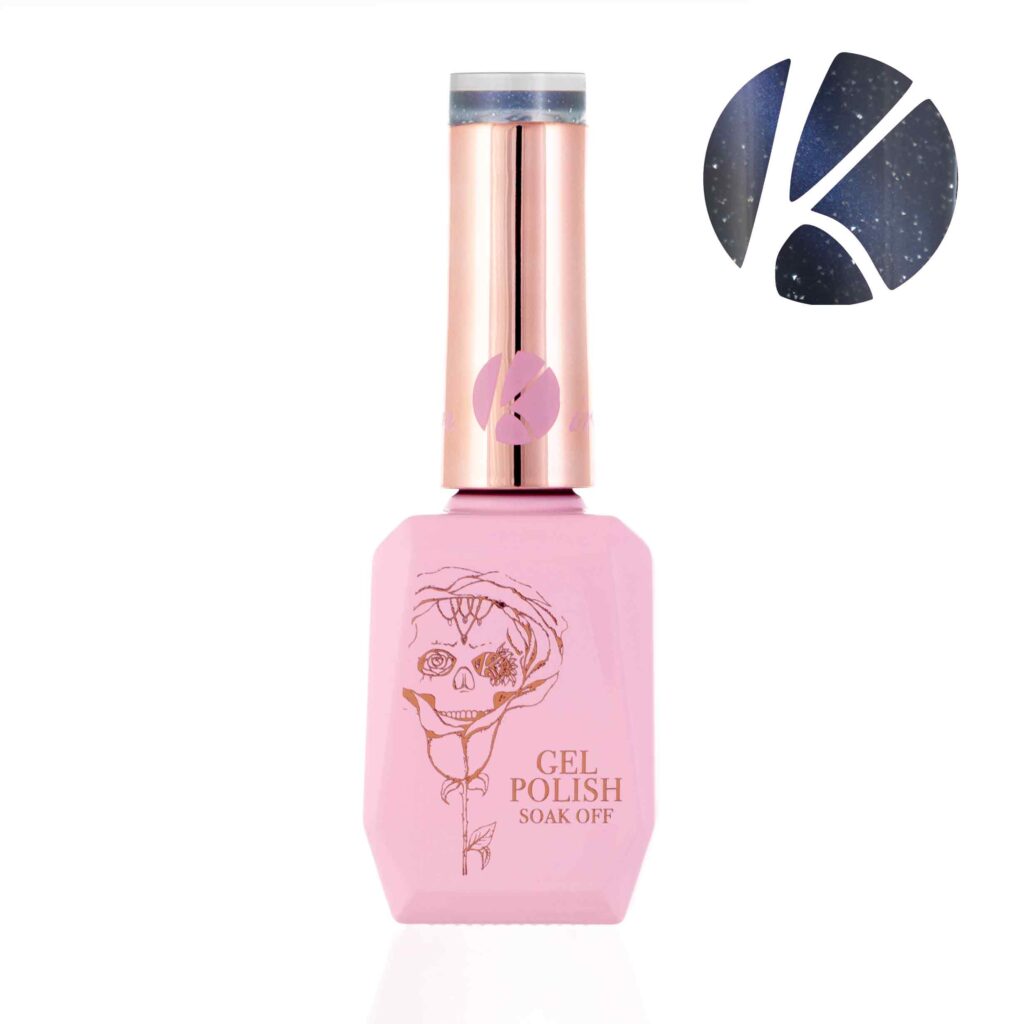
Gel polish is a light-cured coating formulated to harden under UV or LED lamp exposure. Unlike traditional nail polish, which dries through evaporation, gel polish undergoes a chemical curing process. This creates a solid, durable layer that adheres to the natural nail.
The result is a high-shine finish that resists chipping and maintains its appearance for significantly longer than standard polish.
This curing process is central to performance. Without it, the product remains unstable. You can now even get AI nail lamps (see image below):

Gel polish itself does not damage the nail. The risk lies in incorrect handling, and we would always recommend that it be applied by a qualified technician.
Damage is most often caused during removal. Peeling or forcefully scraping the product lifts layers of the natural nail plate. Over-filing during preparation can also weaken the nail structure.
Another, less visible risk comes from poor-quality formulations. Some products contain ingredients that increase the likelihood of sensitivity or allergic reaction, particularly when repeatedly applied or improperly cured.
Most professional-grade gel systems are now formulated to minimise these risks. HEMA-free, TPO-free and vegan formulations are increasingly standard in high-quality products, reducing exposure to known irritants while maintaining performance.
When applied and removed correctly, using a well-formulated system, gel polish should not compromise nail health.
Yes. Gel polish is designed to be used on natural nails, enhancing their appearance while adding a layer of protection.
However, not all nails are suitable for immediate application. Weak, damaged or excessively thin nails may require strengthening or a different approach altogether.
A trained technician will assess the condition of the nail before proceeding. This ensures that the service supports, rather than undermines, nail health.
No. Gel polish does not air dry.
Without UV or LED exposure, the product remains uncured. This is a common misconception, particularly among those new to gel systems. The rule of thumb (or perhaps nail) is Gel Polish = UV/LED lamp – Nail Polish = Air Dry
Any product that claims to be gel polish but dries without a lamp is not a true gel system. The curing process is non-negotiable.
No. A UV or LED lamp is essential.
Curing under the correct wavelength ensures that the product fully hardens. Without this, the polish remains partially uncured beneath the surface. This can lead to lifting, poor wear, and potential skin irritation from uncured chemicals.
Consistency in curing is also influenced by the quality of both the lamp and the product. Professional systems are designed to work together, delivering predictable results.
Gel polish typically lasts between two and three weeks when applied correctly.
Its longevity depends on several factors. Preparation of the nail plate, correct product application and curing all play a role. Lifestyle factors, such as frequent exposure to water or manual work, can also affect wear time.
Where lifting or chipping occurs early, it is usually a sign of incorrect technique (check here for the right one) rather than a flaw in the product itself.
Safe removal is a controlled process.
The surface of the gel is first gently filed to break the top coat seal. The nails are then wrapped or soaked using acetone, allowing the product to soften and lift away from the nail.
At no point should the gel be forcibly removed. Peeling or scraping damages the natural nail and is one of the most common causes of post-treatment weakness.
Professional removal protects the integrity of the nail while preparing it for the next service.

Issues with curing are more commonly linked to under-curing than over-curing. However, incorrect lamp use can lead to inconsistent results.
Over-curing may cause the product to become brittle or uncomfortable during the process. Under-curing, by contrast, leaves the product unstable and increases the risk of allergic reaction due to uncured ingredients remaining on the nail.
This is where formulation matters. High-quality gel systems are designed to cure efficiently within specific parameters, reducing the margin for error when used correctly.
Technically, yes. In practice, it is not recommended without proper training.
Gel application is not simply a case of painting the nail. It requires correct preparation, precise product control and an understanding of curing behaviour. Small errors can result in lifting, uneven finish or long-term damage to the nail.
There are also safety considerations. Repeated exposure to uncured gel, often caused by incorrect application or curing, can increase the risk of contact allergies. Once developed, these sensitivities can be long-lasting and limit future treatment options.
Professional systems are developed with trained technicians in mind. For consistent results and to protect both nail health and skin integrity, gel polish is best applied in a professional setting.
Not all gel polish systems are created equally.
Lower-quality products may rely on ingredients that increase the risk of irritation or compromise long-term nail health. Inconsistent formulations can also lead to unpredictable curing, poor adhesion and reduced durability.
Professional-grade systems are developed with both performance and safety in mind. HEMA-free formulations reduce the likelihood of allergic reaction. TPO-free products avoid ingredients increasingly scrutinised within the industry. Vegan formulations ensure that products are free from animal-derived ingredients while maintaining high performance standards.
These factors are not marketing claims. They directly influence the outcome of the service.
For technicians, this means better control, more consistent results and fewer complications. For clients, it translates to longer-lasting wear, healthier nails and a more reliable finish.
Gel polish is often presented as simple. In reality, it is a controlled system that relies on correct technique, appropriate equipment and high-quality formulation.
Most problems associated with gel polish do not come from the product itself, but from how it is used.
Handled professionally, with the right products, it remains one of the most effective and dependable nail systems available.
Returns:
nails@kirstymeakin.com
Kirsty Meakin,
42 Winpenny road,
Park House Industrial Estate,
Newcastle Under Lyme,
ST57RH
