
Search for gel polish vs acrylic nails and you’ll find the same debate repeated everywhere. Which is better? Which lasts longer? Which should you choose?
But in professional nail work, the question is often framed the wrong way.
Gel polish and acrylic nails are not always competing systems. In many advanced nail designs, they work together. Acrylic creates the structure of the nail, while gel polish delivers colour, dimension and intricate design.
Rather than choosing between them, many nail technicians combine acrylic powder systems with gel polish to create strong, long-lasting and visually detailed sets.
Understanding how each product works reveals why this combination is so effective.
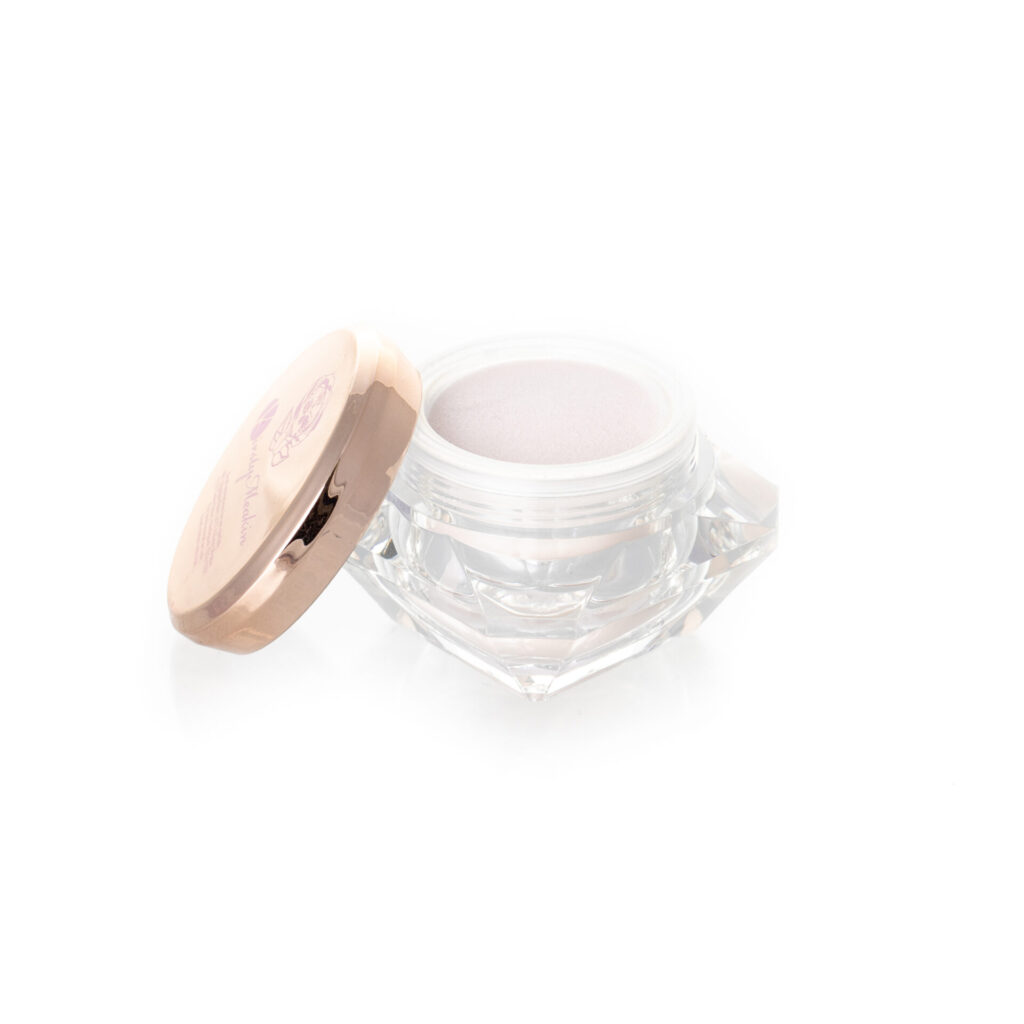
Acrylic nails are built using acrylic powder and liquid monomer, which combine to form a hard, durable layer over the natural nail or nail tip. Once cured, acrylic provides a strong structure that can support length, shape and complex filing techniques.
In a typical set, the process begins by applying nail tips. These are then blended into the natural nail to remove the visible step between the tip and nail plate. Skipping this stage can create a stress point where the enhancement may crack or break.
After blending, the nail is prepared using a dehydrator and primer before the acrylic is applied.
Acrylic powder is then placed onto the nail in controlled beads. A common method uses two beads:
• the first bead builds the lateral length and free edge
• the second bead shapes the cuticle area and apex
The apex is essential in acrylic nails because it distributes pressure across the nail. Without it, long enhancements would be far more prone to snapping.
Once set, the acrylic is filed and refined to create a smooth, balanced structure. At this stage, the nail has strength, shape and durability.
But it is still essentially a blank canvas.
This is where gel polish comes in.
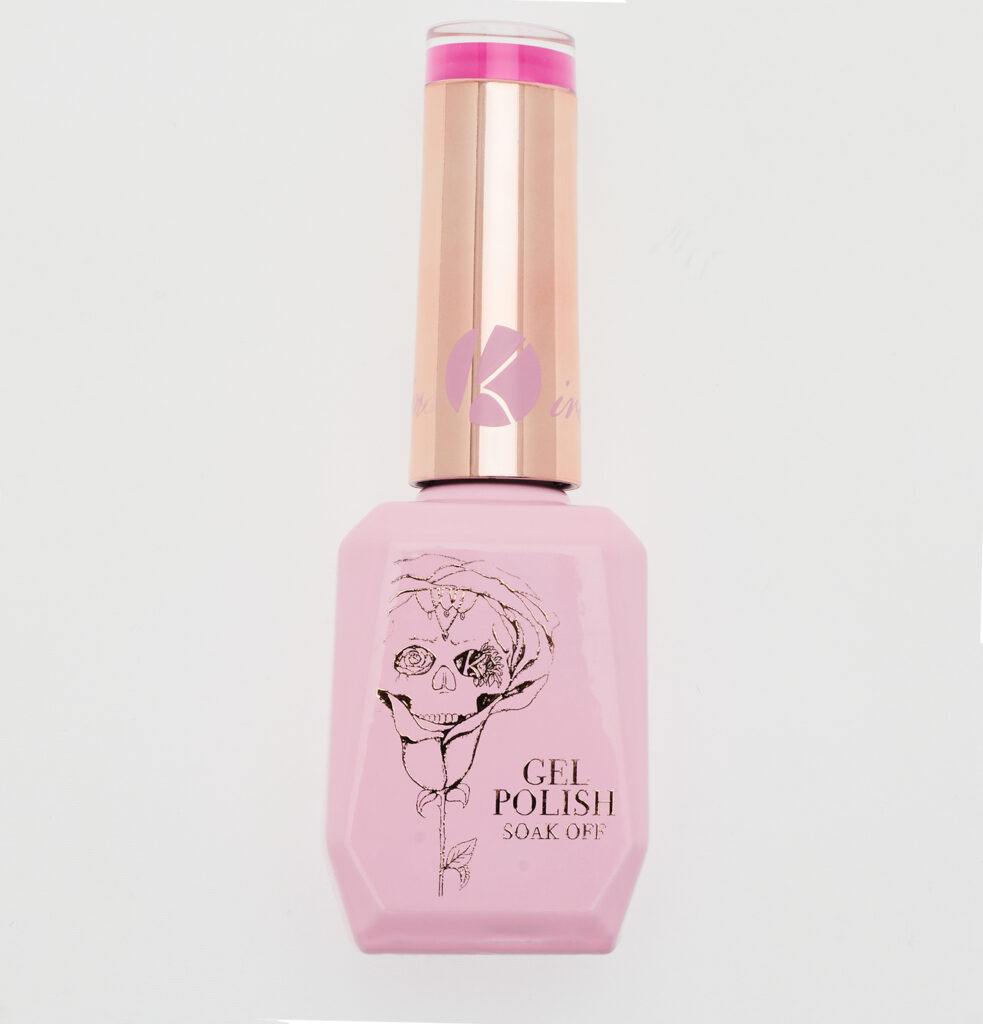
Gel polish is a highly pigmented gel that cures under a lamp, creating a glossy, flexible coating that resists chipping. It is ideal for colour work and intricate designs because it offers far greater control than traditional nail polish.
When applied over acrylic nails, gel polish becomes the creative layer of the design.
Colours can be layered to build depth, while specialist gels introduce effects that acrylic alone cannot achieve. Cat-eye gels, glitter gels and metallic pigments allow nail artists to create complex visual textures.
For example, combining a deep teal gel polish with a rich plum tone creates contrast and dimension that transforms a simple acrylic structure into a statement design.
Because gel polish remains workable until cured, it also allows for fine detailing, such as filigree patterns or delicate line work.
In short, acrylic nails provide the framework. Gel polish provides the artistry.
One of the biggest advantages of combining these systems is encapsulation.
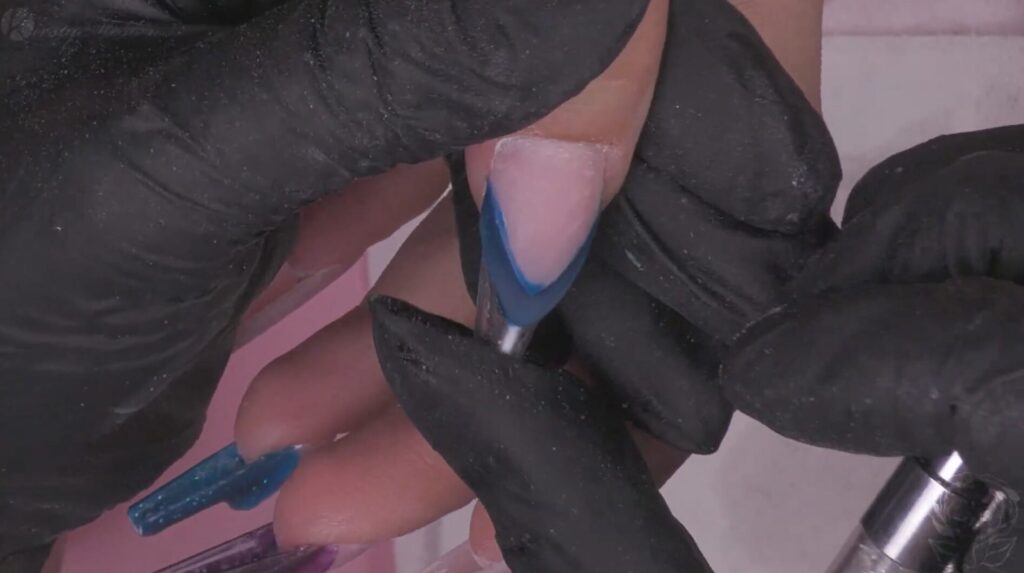
After applying the gel polish design, a layer of clear acrylic powder can be placed over the top of the artwork. This seals the design inside the nail structure.
Encapsulation offers several benefits:
• the design is protected from daily wear
• the surface remains smooth and easy to shape
• filing can refine the nail without damaging the artwork
Clear acrylic also creates depth. Designs appear as though they sit beneath the surface of the nail, producing a dimensional effect that cannot be achieved with surface colour alone.
This technique is often used in advanced nail art, such as 3D French designs, where colour sits behind a structured smile line to create shadow and contrast.
The result is a nail that looks complex and layered, while remaining durable enough for everyday wear.
Once the encapsulation layer has cured, the nail is filed again to perfect the structure. Consistent filing routines help maintain uniform shape across the entire set.
During this stage, nail technicians carefully refine the smile lines, sidewalls and apex to ensure the enhancement remains balanced.
Because the gel polish design sits beneath the clear acrylic layer, the surface can be shaped without risking damage to the colour work underneath.
After filing, a glossy top coat seals the nail and enhances the depth of the encapsulated design.
The finished result combines the strength of acrylic nails with the visual impact of gel polish.
The popularity of both systems has led to a common misconception that clients must choose between them.
In reality, many of the most impressive nail designs rely on both acrylic powder and gel polish working together.
Acrylic nails offer:
• strength and durability
• support for long enhancements
• precise structural shaping
Gel polish provides:
• rich, highly pigmented colour
• detailed artwork and effects
• smooth, glossy finishes
By combining the two, nail technicians can create sets that are structurally strong while still allowing for intricate and creative designs.
This approach is particularly useful for advanced techniques such as encapsulated glitter, dimensional French designs and layered colour effects.
The debate between gel polish and acrylic nails often assumes they serve the same purpose.
They do not.
Acrylic powder systems are primarily structural. They build the nail and provide strength. Gel polish is primarily decorative. It delivers colour, shine and artistic detail.
When used together, they complement each other perfectly.
The acrylic creates the architecture of the nail.
The gel polish adds personality.
For many nail artists, the best results come not from choosing between the two, but from using each product where it performs best.
So the real answer to gel polish vs acrylic nails is surprisingly simple.
You don’t always have to choose. And, if you want to see how Kirsty blends both systems, check out her tutorial here.
Yes. Gel polish is commonly applied over acrylic nails once the acrylic structure has been shaped and filed. The acrylic provides strength and length, while the gel polish adds colour and design. Many nail technicians prefer this combination because it allows detailed nail art while keeping the nail strong and durable.
Acrylic nails are generally stronger than gel polish alone. Acrylic powder and liquid monomer create a rigid structure that supports length and protects the natural nail. Gel polish is thinner and more flexible, which makes it ideal for colour and design but not for building long nail extensions.
For this reason, many nail sets use acrylic for structure and gel polish for the finish.
Acrylic powder is part of a two-part system used to build artificial nail structure. When acrylic powder is mixed with liquid monomer, it forms a hard material that can be shaped into nail extensions.
Gel polish is a coloured gel that cures under a UV or LED lamp. It is mainly used for colour, shine and nail art rather than creating nail length.
In simple terms:
• Acrylic powder builds the nail
• Gel polish decorates the nail
Yes, but the gel polish surface usually needs to be lightly buffed first. Buffing removes the shine and creates a textured surface that allows the acrylic powder to adhere properly.
This technique is often used when encapsulating gel polish designs inside clear acrylic, protecting the artwork and creating a smooth surface for shaping.
Acrylic nails typically last longer because they create a strong structural layer over the natural nail. A full acrylic set can last several weeks before needing an infill.
Gel polish applied to natural nails usually lasts around two to three weeks before regrowth becomes visible. When gel polish is applied over acrylic nails, however, the colour can last as long as the acrylic structure.
Yes. Encapsulating gel polish with clear acrylic powder is a common technique in advanced nail art. After applying the gel polish design, a layer of clear acrylic is placed over the top to seal the artwork inside the nail.
Encapsulation protects the design from wear and creates depth, giving the nail a layered, three-dimensional look.
Both products play different roles in nail art.
Acrylic is better for creating structure, length and sculpted shapes. Gel polish is better for colour layering, fine detail work and special effects such as cat-eye finishes or glitter gels.
Many professional nail designs combine both systems, using acrylic powder for the structure and gel polish for the artistic elements.
Returns:
nails@kirstymeakin.com
Kirsty Meakin,
42 Winpenny road,
Park House Industrial Estate,
Newcastle Under Lyme,
ST57RH
